Apple should not abuse China's goodwill
On June 22, 2026, 48 small and medium-sized and individual developers distributing iOS apps in the Chinese market jointly submitted a letter of complaint to the State Administration for Market Regulation. So far, this is the largest - scale and most legally - postured collective action initiated by the Chinese iOS developer community against Apple.
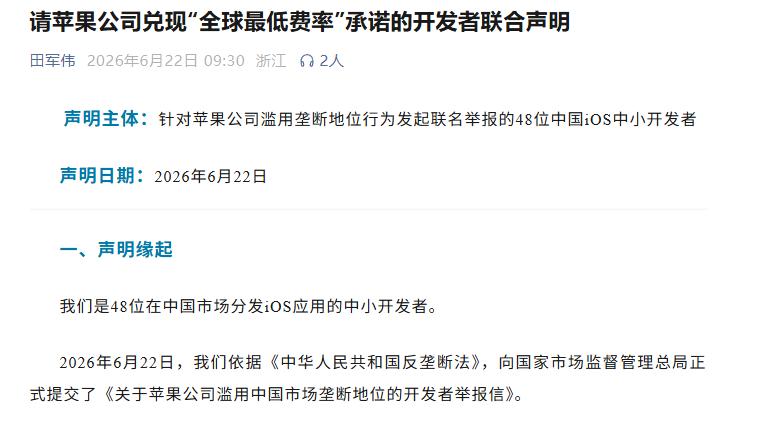
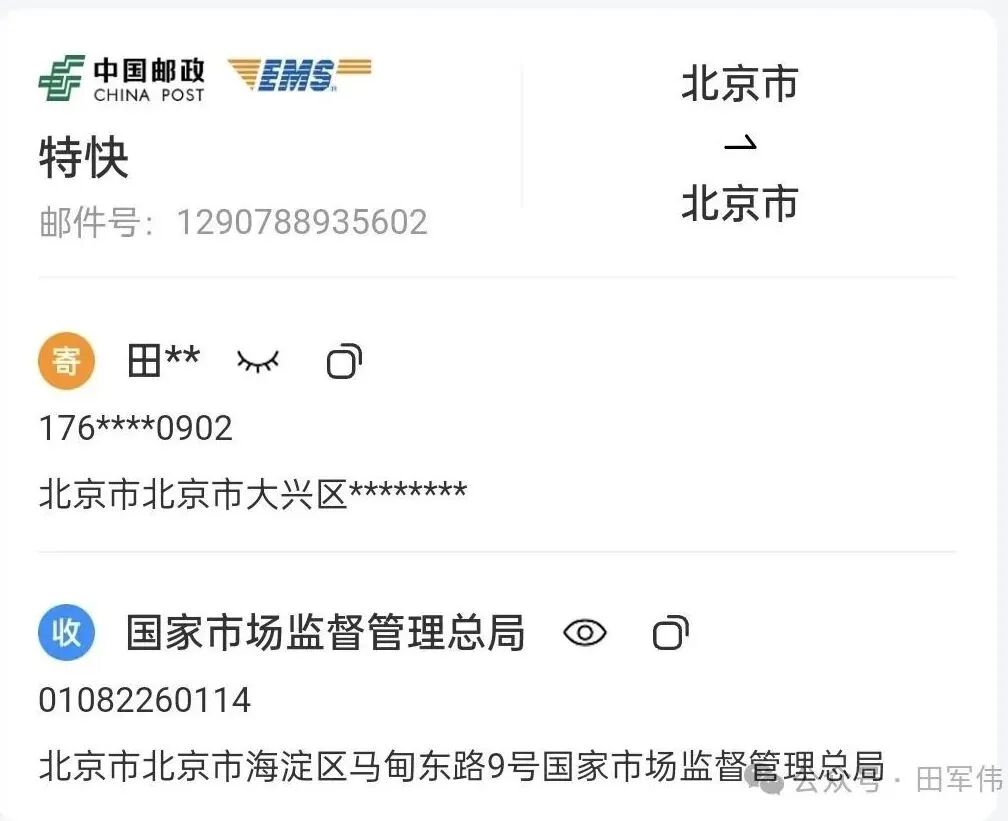
Forty - eight Chinese developers submitted a "Complaint Letter from Developers Regarding Apple's Abuse of Monopoly Position in the Chinese Market" to the State Administration for Market Regulation, pointing out that Apple had failed to fulfill its "lowest global rate commitment" to the Chinese market.
The complaint letter cited the ruling made by the Shanghai Intellectual Property Court in the "Jin v. Apple" case: Apple has a dominant position in the iOS app trading platform market in the Chinese mainland. Then, in accordance with Article 22 of the Anti - Monopoly Law, it accused Apple of three types of behaviors: restricting transactions, imposing unfair high prices, and implementing discriminatory treatment. It demanded the opening of three channels: third - party app distribution, in - app third - party payment, and external link web payment. It also put forward a procedural claim: "When a new fee - reduction/opening policy is introduced in any overseas market, it should be implemented in China on the same day without a transition period."
These 48 developers are not asking Apple for new concessions. They are just asking Apple to fulfill the promises it has made but has long delayed fulfilling.
01
The Truth of the "Lowest Global Rate"
Apple has made a clear commitment to the Chinese market. On March 13, 2026, Apple issued a 308 - word announcement, stating that it would reduce the standard commission rate of the App Store in the Chinese mainland from 30% to 25%, and that for small developers from 15% to 12%. There was a key statement in the announcement: "Always provide App Store rates for Chinese developers that are no higher than the overall rate levels in other markets." This is the origin of what was later widely referred to as the "lowest global rate" commitment.
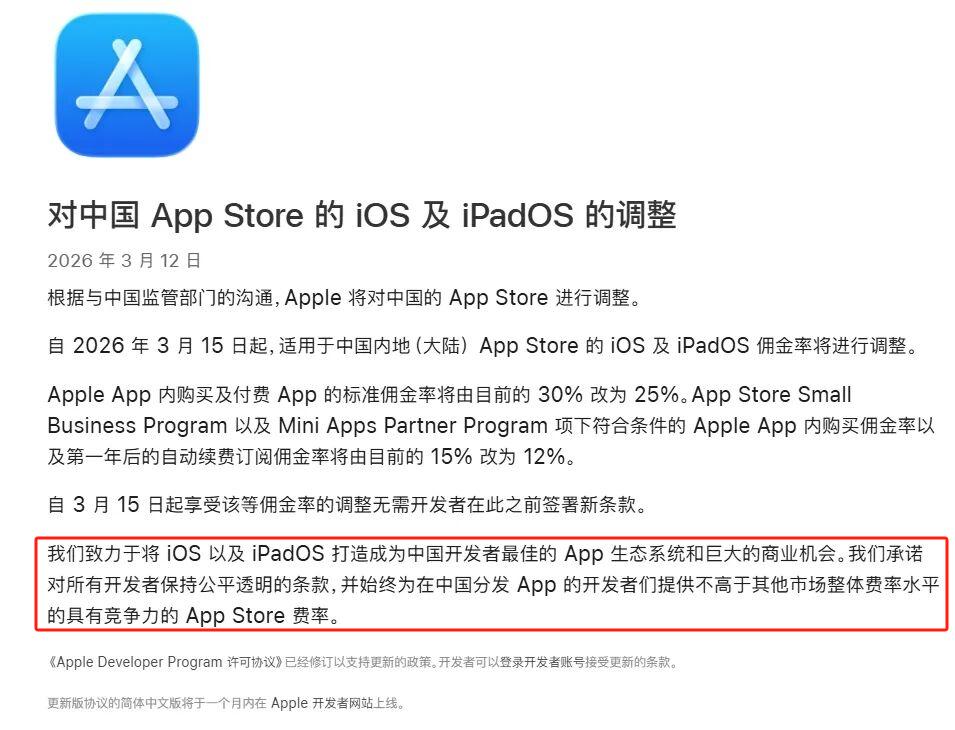
Apple's "most - favored - nation treatment."
Just over three months later, this commitment was shattered by Apple's actions in Brazil. On June 18, 2026, with the release of iOS 26.5, Apple implemented a new set of distribution rules in the Brazilian App Store. This set of rules includes four levels of rates: in - channel commission IAP is 26%/15%, in - app third - party payment is 21%/10%, external link web payment is 15%/10%, and the rate for third - party app stores and sideloading channels is 5%.
In other words, Brazilian iOS developers now have four different distribution and payment paths, with the lowest rate reaching 5%. This plan is not the result of Apple's voluntary concession. Instead, it is a mandatory implementation of the TCC (Administrative Execution Order and Settlement Agreement) signed between Apple and the Brazilian competition regulatory agency CADE in December 2025 after a three - year investigation following a complaint from the local e - commerce platform Mercado Livre in December 2022. The agreement stipulates a cumulative maximum penalty for breach of contract of 150 million reais.
The Brazilian plan is not an isolated case. When looking at the world's major markets, it can be found that Apple's "dual - track" approach has long been the norm.
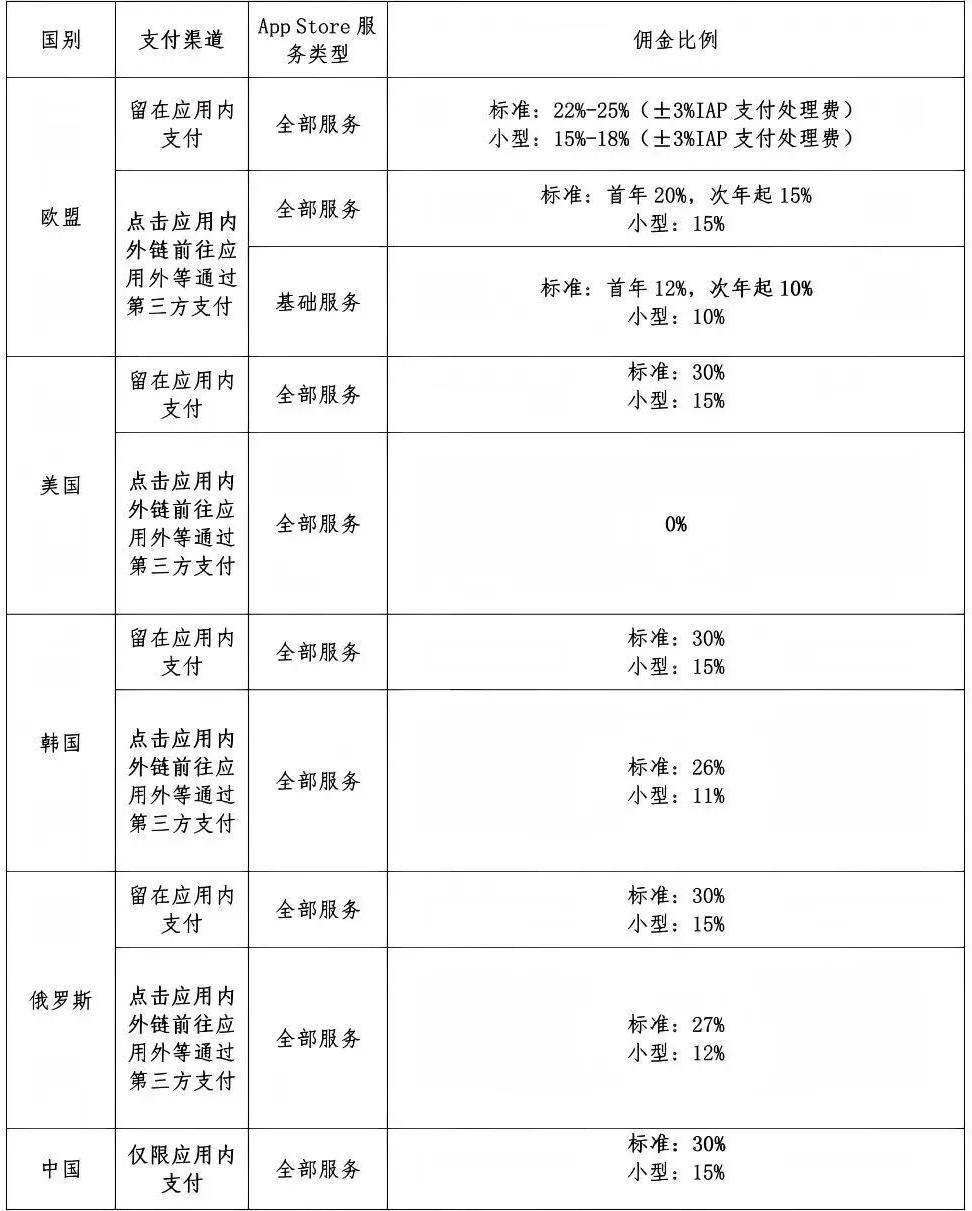
The complaint letter attached a comparison table with shocking data: overseas developers pay a minimum of 5%, while Chinese developers can only pay a minimum of 12% and have no other options.
In the European Union, on April 23, 2025, the European Commission imposed a fine of 500 million euros on Apple based on the Digital Markets Act (DMA). This is the first fine imposed on Apple since the implementation of the DMA. In March 2024, the EU had fined Apple 1.84 billion euros for the Spotify anti - steering case. Now, EU developers can use third - party app stores, sideloading, external link payment, and in - app third - party payment, and the IAP rate has dropped to a minimum of 10%.
In the United States, the Northern District Court of California went even further in the Epic v. Apple case: in 2021, the judge issued an injunction requiring Apple to allow developers to guide users to use external payment; on April 30, 2025, the same judge found that Apple had "willfully violated" the injunction and continued to block external link payment with a disguised 27% commission, and was ruled to be in "contempt of court." The case was even transferred to the prosecutor's office for consideration of criminal prosecution. In December 2025, the Ninth Circuit Court of Appeals upheld the original ruling; in May 2026, the US Supreme Court rejected Apple's emergency request for a stay of execution. Now, US App Store developers using external link payment do not need to pay any commission to Apple.
In Japan, the "Competition Promotion Law for Smartphone Software" officially came into effect in December 2025, which legally forced Apple to open third - party app stores, sideloading, external link payment, and in - app third - party payment. This is the "Japanese prototype" of the Brazilian plan.
In South Korea, in 2021, an amendment to the "Telecommunications Business Act" was legislated, which for the first time in the world prohibited Apple from mandatorily using IAP through legislation. In 2023, the KCC proposed a fine of approximately $20.5 million based on this. In the Netherlands, France, India, and the UK, penalties or investigations are also underway one by one.
Putting the above country - specific situations together, among the world's major markets, the Chinese mainland is the only one still strictly implementing the "anti - steering clause," that is, neither allowing third - party payment, nor allowing external link jumps, nor allowing the use of third - party app stores.
In China, developers face a one - way street: Exclusive distribution on the App Store, exclusive settlement through IAP, and a rate of 25%/12%, without the option of an "alternative channel."
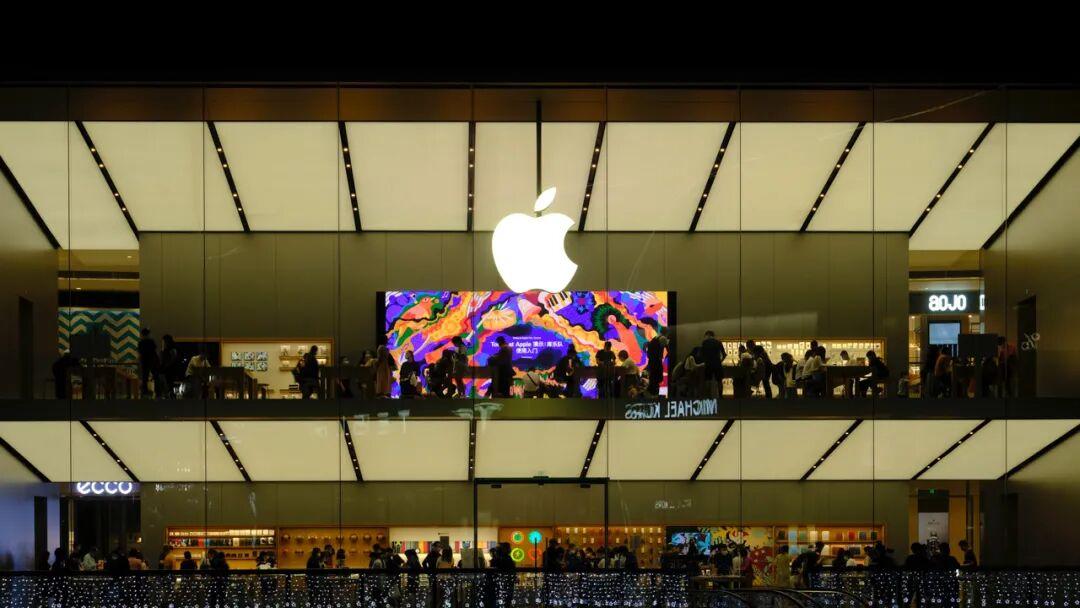
The value of the Chinese market to Apple far exceeds what this kind of word - game is worth. Apple's latest ecosystem report released in June 2026 shows that in 2025, the turnover and sales volume of developers facilitated by the global App Store ecosystem reached $1.4 trillion, of which the Chinese market accounted for $562 billion, ranking first in the world, exceeding the sum of the United States ($453 billion), Europe ($184 billion), and Japan ($52 billion). The scale of the Chinese ecosystem has doubled compared to 2019.
According to Apple's official statement, since the launch of the App Store in the Chinese mainland, developers have cumulatively earned more than 110 billion yuan, and the iOS ecosystem directly supports more than 1.8 million jobs in China. When considering the employment opportunities driven by the supply chain, procurement, and investment, the number reaches the level of 3 million. The number of registered developers in China has reached the millions and has been growing for many years.
From the perspective of the financial report, Apple's total revenue in fiscal year 2025 (from October 2024 to September 2025) was $416.1 billion, of which the revenue from service business (including the App Store) was $109.1 billion, with a gross profit margin of about 75%, nearly twice that of Apple's overall gross profit margin. It has become the second - largest source of revenue after the iPhone. During the same period, the revenue in Greater China was $64.377 billion, making it Apple's third - largest regional market in the world. However, it was also the only major regional market with a year - on - year decline in fiscal year 2025 (a year - on - year decline of 3.8%), while the Americas, Europe, Japan, and other Asia - Pacific regions all had double - digit or near - double - digit growth.
This is Apple's real position in the Chinese market: The world's largest developer ecosystem, the third - largest source of regional revenue, and the core position of the most profitable business segment. It should have enjoyed the "overall rate" in China as in Brazil, Japan, and the EU, but in fact, it hasn't.
02
China's Friendliness and Apple's Response
Compared with developed economies such as Europe and Japan and developing countries such as Brazil, China's overall business environment is extremely friendly to Apple. This friendliness is a consistent practice of China's development - oriented government and export - oriented economic strategy over the past 50 years and is also an important pillar supporting China's economic success.
The question is, what kind of response has Apple made to this friendliness? First, let's look at a set of comparisons:
In the United States, Apple was forced by the domestic court for five years. From the first - instance injunction to the contempt - of - court ruling, and then to the Supreme Court's refusal to grant a stay, every step was mandatory.
In the European Union, Apple only made concessions after being hit with two fines totaling more than 2.3 billion euros under the DMA.
In South Korea, the parliament's legislation directly banned the mandatory use of IAP.
In Japan, the parliament's legislation forced Apple to open four channels.
In Brazil, Apple was forced by CADE with an administrative execution order and a penalty for breach of contract of 150 million reais.
In the Chinese mainland, Apple has never suffered an anti - monopoly administrative penalty and has never been formally investigated. All its concessions have been made in the form of "communication" and "voluntary announcements." The 308 - word announcement in March 2026 has no case number, no agreement text, no supervision mechanism, and no penalty for breach of contract.
China's friendliness to Apple is not only reflected at the regulatory level. The deep - seated connection between Tim Cook and China deserves more attention.
As early as 2013, Tim Cook was appointed as a member of the Advisory Committee of the School of Economics and Management at Tsinghua University. In 2019, he succeeded Jim Breyer as the chairman of the Advisory Committee, which is well - known as an important platform for China's Track - II diplomacy and a core channel for China to show its foreign - friendly attitude. In addition, since 2023, Tim Cook has visited China multiple times almost every year, with a much higher frequency than the CEOs of most American multinational companies.
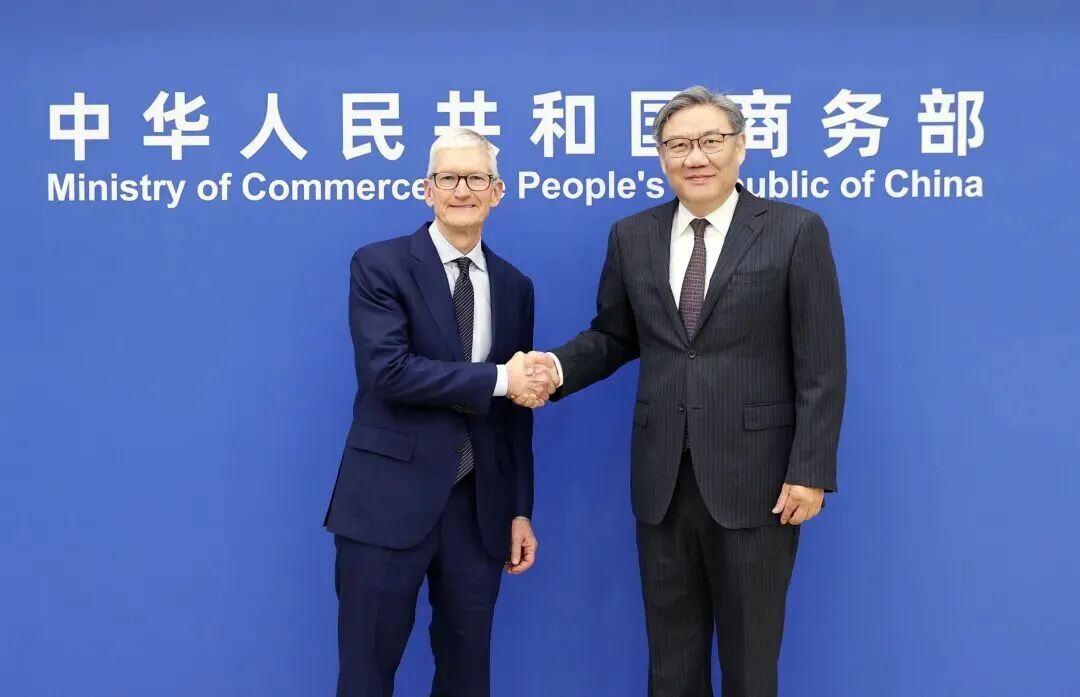
In March this year, Tim Cook visited China. He appeared on the same stage as Li Yuchun, discussed digital technology with a mural restoration team, and exchanged views with Wang Wentao, Minister of Commerce, on Apple's business development in China.
The connection at the supply - chain level is even more obvious. More than 80% of Apple's top 200 most important suppliers globally have factories in China. This is the public statement made by Ge Yue, Apple's vice - president in the Chinese market, at the Second China International Supply Chain Promotion Expo in 2025: "Without Chinese suppliers, there would be no Apple today." Over the past five and a half years, Apple has cumulatively invested $20 billion in China's intelligent manufacturing and green manufacturing fields. According to the public plan, Apple will add another $20 billion in investment to the Chinese supply chain between 2025 and 2027.
To truly understand the significance of China's friendliness to Apple, we need to put it in the context of the more general situation of foreign - invested enterprises.
Looking at the other side of the world, Apple is also a major customer in Brazil, but Brazil is not lenient towards it. In December 2022, the Brazilian local e - commerce platform Mercado Livre submitted a complaint to the competition regulatory agency CADE. CADE immediately launched an investigation, and three years later, with an administrative execution order, replicated the four - level rate plan that Apple was forced to implement in the EU and Japan in Brazil. Apple has no room for "communication" in Brazil and only has the obligation to comply.
Brazil treats Apple the same way it treats Chinese enterprises. Yan Di, a senior Chinese executive who has lived in Brazil for 25 years and has served as the marketing director of Huawei in Brazil, the CEO of Baidu in Brazil, and the country manager of AliExpress in Brazil, recently admitted in an interview with "Xiaguangshe" that in the past 25 years, he has hardly seen any Chinese enterprise achieve real - scale profitability in Brazil. This is not because Chinese enterprises lack the ability.

Yan Di: "If all Chinese enterprises can't make money, it's not the problem of the enterprises, but the problem of the environment."
Brazil ranks 124th in the World Bank's business environment ranking and is known as the "country of ten thousand taxes." With a total of 92 types of taxes at three levels, enterprises need 1,500 hours a year for tax accounting (only more than 100 hours in China). The Brazilian real has depreciated by 133% nominally against the US dollar in the past 20 years. The basic annual interest rate is 14.5%, and the annual compound interest for special check defaults can reach 300%. In 2024, there were 38,722 homicides in Brazil, exceeding the total number of deaths in the Gaza and Lebanon battle